Business Waste Removal in Sydenham
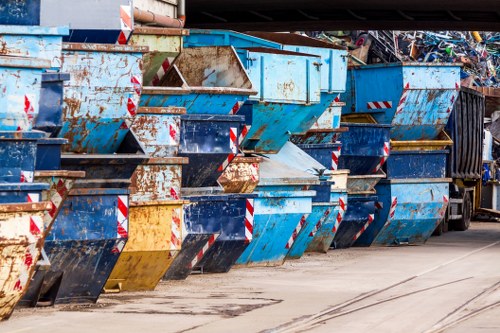
Business waste removal in Sydenham needs a practical, organised approach that keeps everyday operations moving while unwanted materials are taken away with care. Our service is built around commercial waste streams that appear in offices, shops, workshops and other workplaces, including mixed rubbish, packaging, old fittings and general non-hazardous clearance work. We focus on straightforward collection, sensible sorting and clear communication, so you can keep your site tidy without turning disposal into a disruption.
For many organisations, the main value is having waste dealt with in a way that is simple, orderly and dependable. That can mean removing one-off accumulations after a move or refit, or managing recurring clearances when premises generate surplus material faster than it can be stored. We handle commercial loads with attention to access, separation and recycling possibilities, so the job is approached as a working service rather than a rushed collection.
Use the pages below to explore related services, pricing information and how to arrange a job. If you already know what needs clearing, you can also get in touch and request a quotation in a few clear steps.
Commercial clearances for workplaces
Our business waste removal service covers the sort of material that builds up in working premises and starts to occupy valuable floor space, storage rooms or back-of-house areas. That can include bagged rubbish, broken office items, redundant shelving, unwanted stock packaging, display fixtures, and other non-hazardous waste that is awkward to move through normal channels. The aim is not just to take material away, but to do so in a way that respects site routines and keeps other work moving.
Different premises need different approaches. An office may need desks, chairs and surplus filing removed from a floor after an internal change, while a retail unit may be dealing with cardboard, old display hardware and storage clutter. A small workshop might need general debris and offcuts collected together. We plan each clearance around the type of material, the route out of the building and the volume involved, because those details shape the time and method needed.
Office waste and equipment removal
Office clearance is often the most useful starting point when desks, chairs, cabinets or other work items no longer fit the layout of the premises. Offices tend to accumulate a mix of furniture, archive material, packaging and small waste items, so the job benefits from clear sorting before anything is moved. We can remove standalone pieces as well as larger office clearances, always with an eye on access, lifting and the type of surface the team is working over.
Where confidential papers or records are part of the job, a separate disposal route is usually needed. For that reason, services such as confidential shredding may be relevant when the waste includes sensitive documents that should not be mixed with general rubbish. Keeping those streams apart helps the work stay organised and supports more responsible handling of different categories of business waste.
Typical office waste work is often shaped by practical choices such as whether items are dismantled in advance, whether lifts or stairs affect access, and whether the clearance needs to happen before incoming deliveries or fit-out work. Those details can change the order of work even when the material itself looks straightforward, so a brief and accurate description is usually the best place to start.
What we can remove from business premises
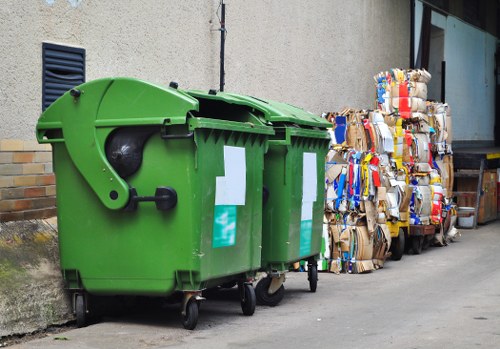
Commercial clearances are rarely limited to one obvious item type. A workplace may have mixed waste sitting alongside redundant fixtures, damaged stock, old appliances or surplus packaging. Our service is designed to deal with that blend in a controlled way, rather than expecting every item to fit into one narrow category. That makes it easier to clear storage corners, service rooms, back areas and other places where odd items collect over time.
Examples of common business waste include broken furniture, shelving, unwanted furniture, office equipment, cardboard, plastics, non-hazardous bulky items and general accumulated rubbish. Where items are still reusable, that is a useful consideration during sorting; where they are worn out or damaged beyond sensible repair, removal and disposal become the main task. The goal is always to separate what can be handled more responsibly from what simply needs clearing away.
Several related services may be relevant depending on what your premises hold. For example, a clearance involving old desks and chairs may sit alongside furniture disposal, while heavier domestic-style items from staff spaces can overlap with furniture clearance. Where the waste is larger and more mixed, the same principles apply: identify the items, decide what should stay and arrange the rest for removal.
Sorting, access and preparation
A smooth clearance usually begins with a sensible look at what is being removed and how it is stored. If waste is in bags, boxes, cages or loose piles, that affects loading and separation. If the items are spread across several rooms, shared corridors or upper floors, access planning becomes just as important as the waste itself. Good preparation is less about creating extra work and more about making sure the collection can be done in the right sequence.
For many customers, the most useful preparation is simply clear information: what needs removing, roughly how much there is, and whether there are any access constraints such as narrow stairs, loading restrictions or limited parking close to the entrance. Photographs can help, but a written summary works too. If any items are not to be touched, it helps to separate them before collection day so the job stays accurate from the outset.
When waste is mixed, it can be useful to divide it by broad type before the collection. A short list can make decisions simpler:
- general rubbish and bagged waste
- bulky items and broken furniture
- cardboard, plastics and packaging
- equipment or fixtures that need special handling
Related removal services
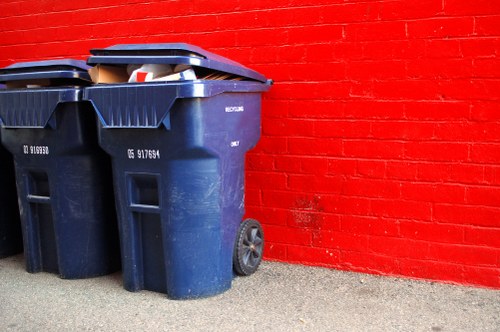
Some business waste jobs overlap with other removal work, especially when a premises is changing use, being reconfigured or emptied in stages. If a workplace also contains domestic-style items, loft contents or storage overflow, related pages such as flat clearance, house clearance and garage clearance may give a clearer sense of the way different item types are handled. The useful point is not the location type alone, but the kind of objects and how they need to be lifted and sorted.
Where waste is bulkier or more awkward, it may sit closer to builders waste clearance or waste removal, depending on the material involved. A fit-out can leave timber offcuts, broken boards, packaging and general debris; a storage tidy-up may produce a different mix altogether. Matching the removal method to the material helps avoid overcomplicating the job and keeps the disposal route appropriate.
For customers comparing options, the main choice is often between a focused load of business waste and a broader clearance that includes additional items from around the site. Understanding that difference early on makes it easier to request the right kind of service. If you are unsure where your waste fits, describe the items in plain terms and ask for guidance before the collection is booked.
About Sydenham
Sydenham is an area in south London, situated within the London Borough of Lewisham and close to the border with neighbouring boroughs in the southeast of the city. It is known for a varied mix of streets, local shopping parades and residential roads that rise towards the higher ground around Sydenham Hill. The area developed significantly with the spread of the railway in the nineteenth century, and that transport history still shapes how Sydenham connects with surrounding parts of London. Crystal Palace Park lies nearby, giving the district an important link to one of the capital’s best-known open spaces and former exhibition landscapes. The park itself is associated with the relocated Crystal Palace, while the wider area has long been tied to Victorian suburban growth. Sydenham also includes a stretch of the River Pool corridor to the north-east and several green and civic spaces that provide breathing room within an otherwise built-up setting. Local landmarks and routes such as Sydenham Road, Bell Green and Sydenham Hill help define the area’s character, while the presence of churches, community buildings and independent businesses gives it a practical everyday identity. Its mix of housing, retail and transport links makes it a recognisable part of south-east London rather than a place defined by one single centre.
Waste types, limits and compliance
Commercial waste removal is most straightforward when the waste is non-hazardous and the material has been described clearly. If a job includes items with special disposal requirements, the safest approach is to identify them separately rather than combining them with general waste. That might apply to certain appliances, damaged containers, or materials that should be assessed before collection. Clear categorisation helps the right process be chosen and reduces avoidable handling on site.
For heavier or more awkward items, such as fridges, cookers or other large appliances, a different route may be more suitable. Related services like fridge and appliance removal exist because those items are often bulky and may need separate treatment from normal office or shop waste. Similarly, where there are old fittings or soft furnishings, pages such as mattress and sofa disposal can be relevant to the item type rather than the building it came from.
It is sensible to be precise about what is and is not included in a collection. If certain items are to remain on site, they should be identified before the team begins work. That keeps the removal focused, reduces the chance of misunderstanding and helps the collection stay within the agreed scope. Where the waste is unusual, a straightforward description is better than trying to force it into the wrong category.
Recycling and sorting options
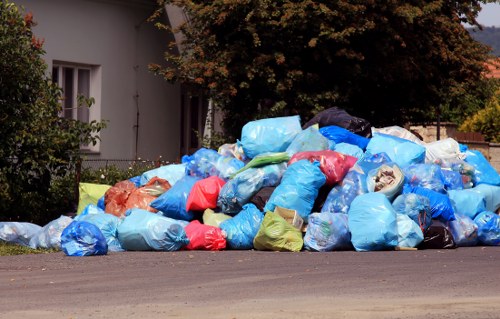
Many business clearances contain a mixture of items that do not all need the same treatment. Cardboard, metals, plastics and reusable furniture may need to be separated from general rubbish, while worn-out items may go straight to disposal. A good clearance service treats sorting as part of the work rather than an afterthought, because that is what allows the collection to stay organised and proportionate to the contents of the premises.
Our approach is shaped by the material on site and the way it is stored. Where possible, items that are suitable for further processing are separated from mixed waste, and the remainder is handled as efficiently as the load allows. That is one reason why a clear description of the contents matters: it helps determine whether the job is mostly a simple collection or a more involved mixed-item clearance with several waste streams.
For customers comparing services, recycling and disposal should be understood as part of the same practical decision. If you know what needs removing, you can ask for a quotation that reflects the actual load rather than a broad estimate based on guesswork. Send through the basics, keep the item list honest and choose the service that matches the waste. That gives the best chance of a tidy, well-planned result.
Pricing and quotations
Quotation details usually depend on the amount of waste, the type of items, how accessible they are and whether the collection involves straightforward loading or more careful sorting. A small office tidy can be very different from a multi-room clearance with stairs, awkward parking or mixed bulky objects. The most useful quote is one that reflects the actual work rather than a generic assumption about what a business load might contain.
If you are preparing to request a price, it helps to note whether the waste is bagged, boxed, loose or still assembled, and whether any items are particularly heavy or awkward to move. That does not need to become a formal inventory. A short description is often enough to show what kind of removal is needed. Pricing and quotes may also help you understand how the service is approached before you enquire.
When you are ready, contact us to request a quotation for business waste removal in Sydenham. If you prefer, you can also review book online and decide which route suits your schedule. Either way, the important step is to give a clear description so the collection can be planned accurately from the start.